
Length Takes Time. Retention Takes Care
- Hairline Illusions

- 6 days ago
- 16 min read
Updated: 8 hours ago

H A I R & W I G S C I E N C E S E R I E S
HIASTI Clinical Education
Length Takes Time. Retention Takes Care.
What sets the ceiling, what decides whether a fibre survives to reach it, and where care genuinely changes the outcome

She tells you her hair will not grow past her shoulders. She has said it for years, and she believes it about herself the way people believe things about their own bodies.
Often, her hair is growing. It is not surviving long enough to show.
That distinction is worth understanding precisely, because it governs what you tell a client, what you promise, and what you build.
Density and length are different measurements
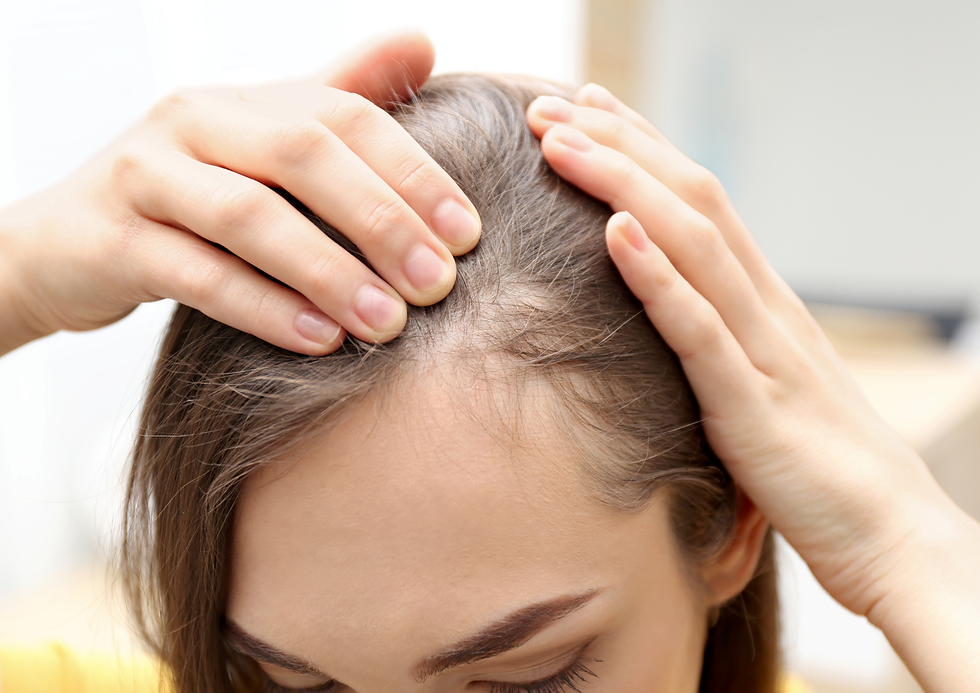
Density is the number of hairs within a given area of scalp. Length is how far an individual shaft grows and remains intact. They are governed by different mechanisms, and confusing them produces much of the bad advice in this industry.
On a healthy scalp, density can remain relatively stable because the follicle cycles are staggered. At any moment the large majority of scalp follicles are in the growth phase and only a small fraction are resting, so the fifty to a hundred hairs lost in a day barely register against the total.3,4 Hair leaves, follicles rebuild, and the count stays roughly level.
Length is governed differently, and it helps to hold two equations apart.
Biological length potential = follicle biology + time
Visible achieved length = growth + time + retention
The first is largely not modifiable through routine cosmetic hair care. The second is where care does its work. A client cannot choose her anagen duration. She can decide, every day, whether the fibre her follicle is producing survives long enough to show what that follicle was capable of.

What actually sets length
Scalp hair reaches greater length than hair anywhere else on the body, and the reason is duration more than speed. The growth phase of a scalp follicle lasts roughly two to seven years, far longer than the weeks or months allotted to eyelash, brow, or body hair.3
Maximum length is determined primarily by how long the follicle remains in anagen, and secondarily by rate of growth.3,10 That duration is largely inherited, and it functions as a ceiling.
The arithmetic illustrates the point. At an average rate, a follicle releasing at three years produces a shaft in the region of shoulder length, while one holding for seven produces something far longer. These are illustrations rather than predictions. Anatomy, growth rate, curl geometry, trimming, and breakage all intervene between the calculation and the mirror.
A woman with hair to her hips may have follicles that remain in anagen longer, giving each shaft more time to accumulate length, provided that shaft remains intact.
Where the ceiling can move
The qualifier in that last section matters. Anagen duration is largely not modifiable through routine cosmetic hair care, and hormonal state is the main reason those words are there.
Oestrogen prolongs anagen. Pregnancy demonstrates it plainly, and the shedding that arrives two to three months after delivery is the withdrawal. Menopause runs the same mechanism in reverse: a reduced proportion of anagen hairs has been demonstrated in postmenopausal women, more markedly over the frontal scalp than the occipital.18 A woman who could once grow to her waist may find that her ceiling has genuinely moved, and nothing done to the fibre will move it back.
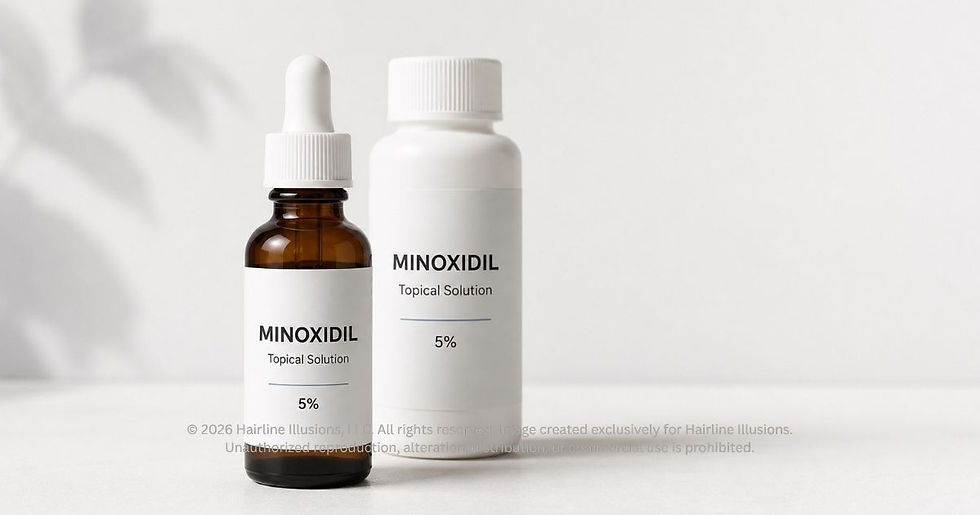
Hormone therapy is not a hair treatment. A 2026 systematic review of thirteen studies concluded that current evidence does not support the routine use of topical oestrogen or systemic menopausal hormone therapy for menopausal hair loss. Results were inconsistent, some studies reported an increased risk of frontal fibrosing alopecia, and no study had evaluated topical 17-beta-oestradiol, the formulation most commonly used. Topical minoxidil remains the only treatment approved for female pattern hair loss.19
That frontal fibrosing finding deserves attention in this practice specifically, because it means a therapy taken for menopausal symptoms sits in the same conversation as a scarring alopecia at the hairline.
Thyroid disease alters cycling in both directions, and androgen excess, including polycystic ovary syndrome, drives miniaturisation. Both are identifiable with testing rather than with product, and both are treatable. Antiandrogens and 5-alpha reductase inhibitors are used off-label in female pattern hair loss and belong to a physician.20
A plateau that is thyroid-driven does not need a better conditioner. It needs a blood test.
Growth rate is not identical across studied populations
Duration is not the only inherited variable. Measured scalp-hair growth rates also differ across studied populations, and the differences are larger than many practitioners assume.
In a study of thirty-eight adults native to central and western Africa, phototrichogram measurement recorded a mean growth rate of 256 micrometres per day, compared with 396 micrometres per day in a Caucasian group of comparable age.1 That is roughly 0.77 centimetres per month against 1.19. The same study found lower density in the African cohort, 190 hairs per square centimetre against 227, and a higher proportion of hairs resting at any given time, 18 percent against 14 percent.1 A later study of 2,249 young adults across twenty-four ethnic groups on five continents reached consistent conclusions, and additionally found Asian hair growing faster than either.2
Two cautions belong with those figures, and they matter more than the figures themselves.
The variation within a group exceeds the difference between groups. In that same African cohort, individual growth rates ranged from 150 to 363 micrometres per day.1 The slowest and the fastest in one group differ from each other far more than the group averages differ from each other, which means these numbers describe populations and cannot predict the individual growth rate of the woman in your chair.
An average is not a limit. A measured trend explains why a pattern appears across many heads. It does not tell any individual what her hair can do, and it should never be used to lower what she expects of it.
Why hair may not reach its ceiling
Growth rate and the ability to retain that growth are separate questions.
Here is the part that matters most in practice. Terminal length is decided by whichever arrives first, the end of the growth phase or the failure of the shaft.
For many people, particularly when the fibre is highly textured, chemically processed, or repeatedly exposed to mechanical stress, shaft fracture can prevent the hair from expressing its full length potential. In those cases, the practical ceiling becomes mechanical rather than biological.
Hair with a higher curl pattern is generally more susceptible to mechanical damage along the shaft, and that susceptibility is a retention problem rather than a growth problem. One caution belongs with this. Current reviews warn against treating African hair as a single structural type, because variation within populations is considerable and overlap between them is substantial. What matters clinically is the individual fibre in front of you and how it behaves under tension, not the category it has been assigned to.
What the long-hair traditions actually document
Two communities appear whenever extreme hair length is discussed, and both are instructive, though they require different handling.
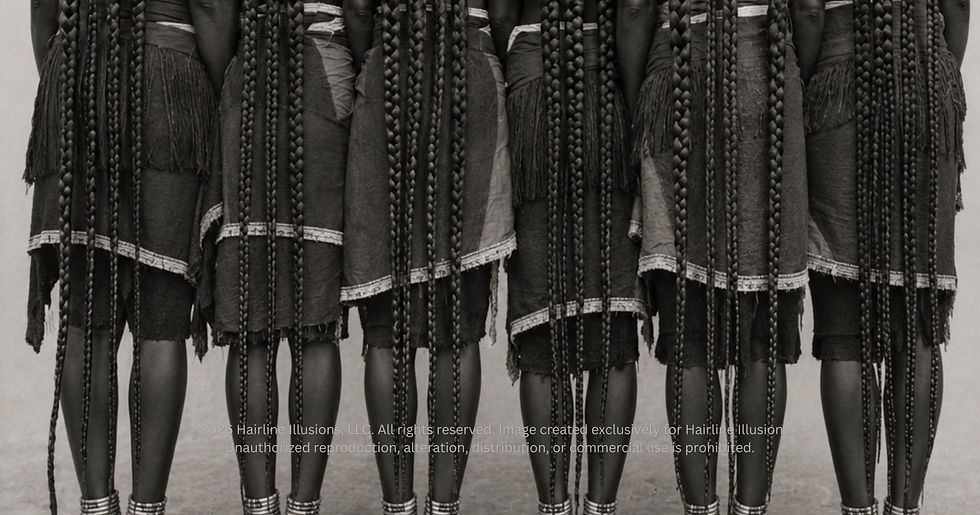
The Mbalantu. Among the Mbalantu of northern Namibia and southern Angola, part of the broader Aawambo peoples, women are historically known for eembuvi plaits. Traditional preparation begins in girlhood and has included a mixture of finely ground omutyuula tree bark with oil or fat, built up over years. Historical description goes further than calling them constructed objects: long sinew strands, in some accounts reaching the ground, were attached to the hair around the age of sixteen and later formed into the two or four thick eembuvi plaits worn before the ohango initiation, drawing on reports from the early 1900s and a 1930s photograph by C. H. L. Hahn.15 The visual length of an eembuvi style is therefore not the measured length of unaugmented scalp hair.
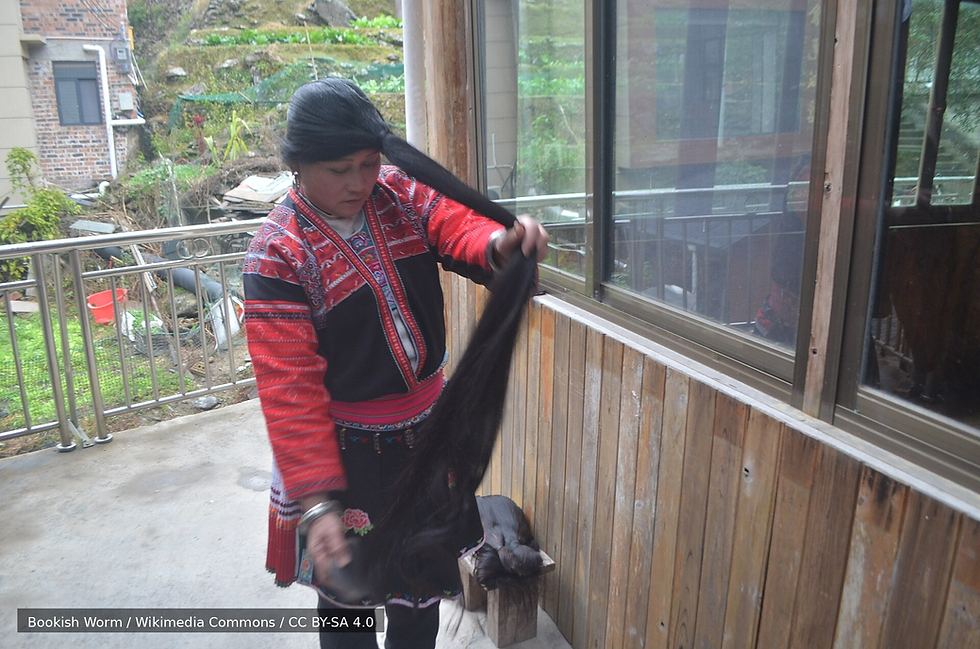
The Red Yao women of Huangluo, in Guangxi, China, are documented for exceptionally long hair. This example also requires careful interpretation. Traditional accounts describe women preserving hair cut during a coming-of-age ritual, as well as collecting shed hair, and incorporating preserved hair into certain later hairstyles. Ethnographic fieldwork conducted across several Longsheng villages between 2007 and 2009 records women saving naturally shed hairs rather than discarding them, gathering them into bundles, and working those bundles into the hairstyle alongside their attached hair.14 Sources differ on whether traditional cutting occurred only at adolescence or also once in early childhood, and contemporary festival presentations have standardised or altered aspects of the ritual. Consequently, photographs of elaborate Red Yao hairstyles should not automatically be interpreted as showing only currently attached scalp hair. At the same time, the community is genuinely documented for exceptionally long continuously grown hair, so the presence of preserved hair does not negate the underlying tradition. Individual photographs must be evaluated according to how the hair is being worn and what the source actually documents.
One further claim deserves separating rather than repeating. Red Yao women are often described as retaining very dark hair into later life, and this is frequently attributed to traditional rice water washing. Three distinct questions are collapsed in that attribution: whether rice water measurably affects the fibre, whether it affects greying, and whether either has any bearing on length. Greying is governed by melanocyte biology, age, and genetics. The cultural practice can be documented and respected without any of the three being established.
Retention takes care
What these traditions most clearly illustrate is the importance of retention.
Threading, plaiting, wrapping, covering, oiling, and the near-absence of heat and chemical processing all do the same work: they keep the fibre intact long enough for the follicle to approach its inherited ceiling. There is no established evidence that these practices extend the anagen phase. What they do is reduce the chance of the hair breaking before the follicle is finished with it.
Length potential is largely biological. Retention is modifiable. Many women who believe their hair will not grow are watching a breakage problem rather than a growth problem.
Retention is not passive and it is not luck. It responds to specific practices, and those practices are the part of length potential we can influence most directly.
Appropriate cleansing for the individual scalp. Conditioning and lubrication suited to the fibre. Minimising unnecessary manipulation and friction. Detangling in a way that does not tear. Protecting the oldest and most weathered ends, which have been through everything the newer hair has not. Managing heat and chemical exposure. Avoiding excessive tension. And recognising scalp disease rather than attempting to solve everything cosmetically.
Some of this is measurable rather than merely sensible. Certain conditioning treatments have been shown experimentally to improve combability and protect chemically treated Afro-ethnic hair from mechanical damage, assessed by protein loss, combability, and tensile rupture.11 Pre-wash oiling with coconut oil has been shown to reduce protein loss from the fibre under controlled conditions, an effect attributed to lauric acid penetrating the shaft rather than simply coating it.8
Where the scalp fits
Cleansing removes accumulated sebum, sweat, environmental debris, microorganisms, and product residue, and studies examining wash frequency have found differences in scalp condition associated with how often the scalp is cleansed.9 There is no universal schedule that suits every scalp and every hair type, and the available work has been conducted in specific populations rather than across all of them.
The claim to avoid is that a clean scalp makes hair grow longer or faster. That cannot be established as a general rule. Appropriate scalp hygiene helps maintain an environment in which the scalp can function normally, and allows scalp disorders to be recognised and managed. It does not override an individual's genetically and biologically determined hair-cycle characteristics.
Scalp disease is a separate matter from ordinary cosmetic cleansing. Treating seborrhoeic dermatitis with an appropriate medicated shampoo can significantly improve the disorder. That is a real clinical result, and it still does not mean that washing more often lengthens anagen. Recognising the difference between a scalp that needs cleansing and a scalp that needs treating is part of what separates a practitioner from a product recommendation.
What about the methods people try
Clients rarely ask about retention. They ask how to make it grow faster, and the honest answer is that growth rate is one of the least modifiable parts of the equation. Most established hair-loss treatments are evaluated by changes in hair count, density, shaft calibre, or hair cycling. They are not evidence that a healthy hair shaft can suddenly extend several times faster.
First, a word about what we see in practice
Clients report regrowth on things the literature has not confirmed, and we have watched it happen. That observation is not nothing. Case observation is where most hypotheses begin, and dismissing it because a trial has not been run is its own kind of error.
What observation cannot do is tell us why. A woman who starts a new oil usually changes several things at once, and hair loss with a resolving trigger recovers on its own timeline regardless of what is applied to it. So we record what we see, we say plainly that we have seen it, and we stop short of converting it into a claim about cause.
Both statements can be true at the same time. This helped her, and we do not yet know that it was the treatment.
What follows is sorted by how much is actually known, rather than by how promising anything sounds.
Controlled evidence exists
Rosemary oil. A randomised comparative trial assigned 100 patients with androgenetic alopecia to rosemary oil or 2 percent minoxidil for six months. Neither group changed significantly at three months. Both increased hair count significantly by six months, with no significant difference between them, and scalp itching was more frequent in the minoxidil group.21 One trial, a modest sample, and a comparison against the 2 percent rather than 5 percent concentration, so it is not the last word. It is still the strongest controlled evidence any botanical option has.
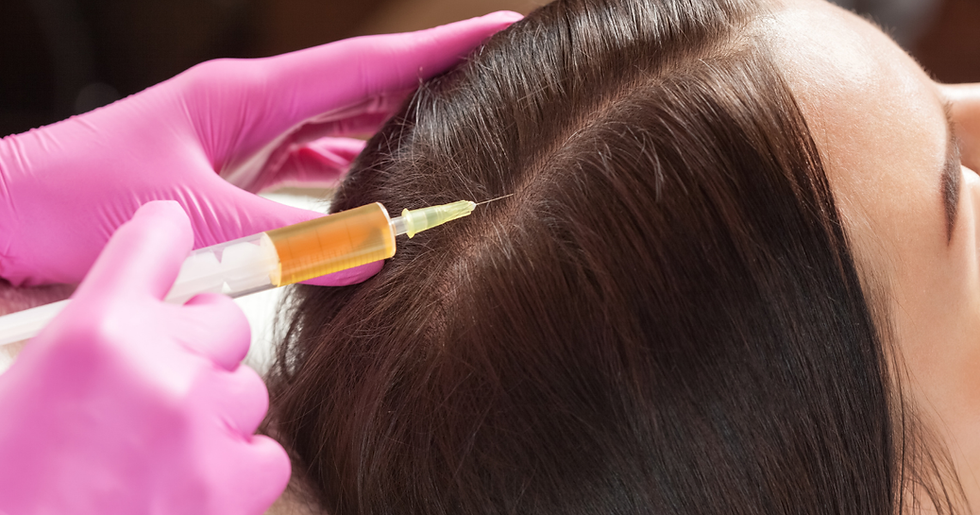
Platelet therapies. Asked about more than anything else on this list, and the answer depends entirely on which condition is being treated. In androgenetic alopecia, systematic reviews report increased hair density against placebo, while noting high heterogeneity between protocols, moderate risk of bias, and evidence of publication bias, so the reviewers themselves call for better trials before the finding is treated as settled.16,17 In scarring alopecia the follicle has been replaced by fibrous tissue and does not regenerate; where benefit is reported it is reduced disease activity rather than regrowth, it was transitory in at least one report, and concurrent androgenetic alopecia may be what is responding. In traction alopecia the published regrowth reports combine PRP with microneedling, so the effect cannot be attributed to PRP alone. All of it is a physician procedure, and recommending it sits outside practitioner scope.
Minoxidil, and microneedling with it. Minoxidil has genuine clinical-trial evidence for certain forms of hair loss, particularly androgenetic alopecia, and it can affect hair cycling. Topical minoxidil is available without a prescription in the United States, although that does not mean every type of hair loss should be self-treated. Microneedling combined with minoxidil has outperformed minoxidil alone in randomised studies of androgenetic alopecia, but microneedling requires appropriate clinical judgment. Correcting a documented nutritional deficiency and treating actual scalp disease belong in this category too.

Limited, or evidence for a different condition
Onion juice. The study everyone cites is real, and it is narrower than the citation suggests. Thirty-eight participants with alopecia areata, an autoimmune patchy hair loss, applying crude onion juice against tap water for six weeks, with regrowth in the large majority of the treated group against a small minority of controls.22 That is alopecia areata, not pattern hair loss, and the trial has not been replicated. A separate randomised trial of aromatherapy oils in alopecia areata, including rosemary, also found significant improvement over carrier oil alone.23 Promising for one diagnosis. Unstudied for the others.
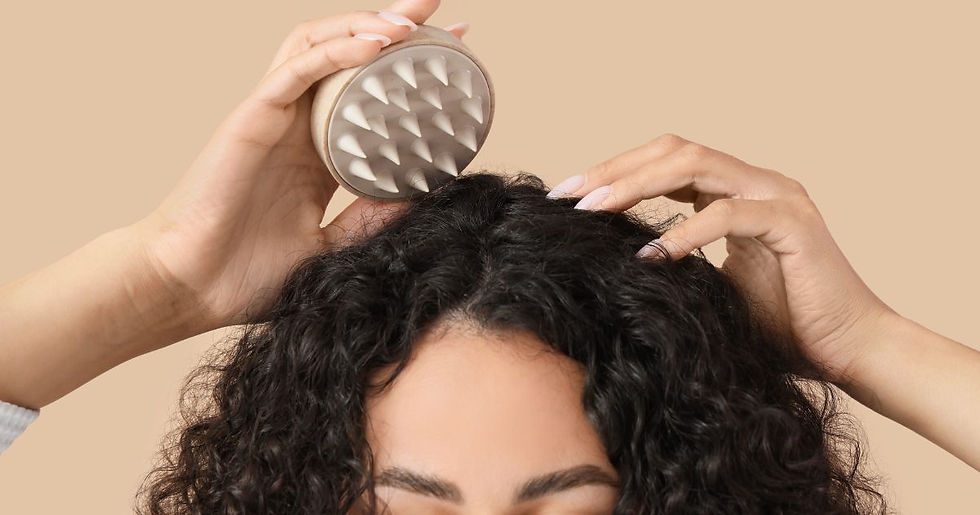
Scalp massage. The most cited study followed nine men performing four minutes of standardised massage daily for twenty-four weeks, and recorded an increase in hair thickness from 0.085 to 0.092 millimetres.12 Two details usually go missing. Hair count did not change significantly, and the outcome measured was thickness, not length or growth rate. A 2019 retrospective survey of 340 respondents, 327 of whom reported attempting the massages, recorded self-assessed improvement, which is a real-world signal rather than controlled evidence.13 Promising, not established, and it does not support a claim of faster growth.

PRF. Biologically plausible and clinically unproven for these uses. The prospective work available is in androgenetic alopecia, uncontrolled, and does not transfer to the other diagnoses.
Rice water. Discussed above with the Red Yao tradition. Three separate questions live inside that claim, and none of the three is settled.

The inversion method. Hanging the head below the heart for several minutes a day, usually with oil and massage, is claimed to produce an inch of growth in a week. There is no published clinical evidence supporting that claim, and that rate would be roughly ten times the commonly cited average rate of scalp hair growth. Head-down positioning can also increase pressure inside the eye, and full inversion has been shown to raise blood pressure, which makes the practice particularly concerning for people with glaucoma or certain cardiovascular conditions.

Castor oil, including black castor oil. Widely used and widely reported to help, with no controlled trial supporting a growth claim. It should also be said plainly that castor oil does not cause hair loss, a claim that has begun circulating in the opposite direction. What exists is a small number of published case reports describing acute hair felting, in which the hair mats into a dense tangle that usually has to be cut out, reported in association with oil application and vigorous washing. Case reports establish that something has happened to somebody. They do not establish how often, to whom, or under what conditions. The mechanism is mundane rather than biological. Castor oil is heavy and does not rinse out easily, and heavy oils left in textured hair make detangling harder rather than easier. Add rough handling and the conditions those reports describe are in place. Given that the whole argument of this article is retention, a product that can cost a client her length in a single wash deserves naming.

A personal note
I have tried a lot of these myself. Onion juice. Rosemary oil. Microneedling. Scalp massage. Even the inversion method. I keep going back to these because I love natural alternatives, and I always have. And actually, my hair did grow. So I am not writing this to tell you these things do not work. I watched them work on me.
Except the inversion method. That one I tried, and it is the one I would not go back to, for the reasons in the section above.
Then I shared all of it with friends and family. Same routine, same products, same patience. For some of them it worked. For others, nothing happened at all.
That is the whole point. One scalp, one set of genetics, one anagen phase, one routine changing several things at once. What happened on my head was never evidence of what would happen on theirs, and it is not evidence of what will happen on yours.
I am not a doctor, and I am not going to tell you what to put on your scalp. What I will say is this. Do not let a bottle of oil stand in for the question of why your length stops where it stops. Because if the answer is breakage, or tension, or a thyroid, or an anagen phase that runs three years instead of six, nothing in that bottle is going to reach it.
Treatments may increase the number of follicles in anagen, prolong anagen, improve shaft calibre, restore growth impaired by disease or deficiency, or help someone retain more of what grows. That is very different from making an otherwise healthy shaft physically extend several times faster.
The same practices carry a load
The honest version of this material does not end with admiration.
Threading and plaiting protect the shaft and load the follicle at the same time. Sustained tension, small sections at the hairline, added weight, and long wear intervals are precisely the variables that produce traction alopecia, which begins as a mechanical and potentially reversible condition and can become scarring after prolonged injury.5,6,7
So the tradition and the hazard live in the same practice, separated only by how much tension is applied and for how long. A style that protects the fibre can injure the root, and both things can be true of the same head on the same day.
What this changes at the fitting table
When a client says her hair will not grow, the useful response is not reassurance and not a product. It is a question about which mechanism is operating.
If the shaft is fracturing, the work is in handling, tension, and chemical load, and length will follow without anything being added. If the follicle is releasing early, routine hair care cannot correct the underlying cycle, and that finding warrants appropriate referral when pathology is suspected, since shortened anagen can occur in treatable hair disorders. And if there is tension damage at the margin, the fitting itself becomes part of the equation, because a foundation that anchors into surviving hair draws down the reserve that is already under strain.
The client cannot tell these apart. That is what she is coming to us for.
You cannot care your way into a seven-year anagen phase. But you can care for a seven-year-growing fibre so poorly that it never survives long enough to show you what the follicle was capable of.
References
1. Loussouarn G. African hair growth parameters. British Journal of Dermatology. 2001;145(2):294-297. doi:10.1046/j.1365-2133.2001.04350.x. PMID 11531795. https://pubmed.ncbi.nlm.nih.gov/11531795/
2. Loussouarn G, Lozano I, Panhard S, Collaudin C, El Rawadi C, Genain G. Diversity in human hair growth, diameter, colour and shape. An in vivo study on young adults from 24 different ethnic groups observed in the five continents. European Journal of Dermatology. 2016. doi:10.1684/ejd.2015.2726. PMID 27019510. https://pubmed.ncbi.nlm.nih.gov/27019510/
3. Physiology, Hair. StatPearls. National Center for Biotechnology Information. https://www.ncbi.nlm.nih.gov/books/NBK499948/
4. Malkud S. Telogen effluvium: A review. Journal of Clinical and Diagnostic Research. 2015. doi:10.7860/JCDR/2015/15219.6492. https://doi.org/10.7860/JCDR/2015/15219.6492
5. Samrao A, Chen C, Zedek D, Price VH. The "Fringe Sign": A useful clinical finding in traction alopecia of the marginal hair line. Dermatology Online Journal. 2011. https://escholarship.org/uc/item/25m840mz
6. Traction alopecia: A neglected entity in 2017. Indian Journal of Dermatology, Venereology and Leprology. https://ijdvl.com/traction-alopecia-a-neglected-entity-in-2017/
7. Traction alopecia. JAMA Dermatology Patient Page. https://jamanetwork.com/journals/jamadermatology/fullarticle/2804567
8. Rele AS, Mohile RB. Effect of mineral oil, sunflower oil, and coconut oil on prevention of hair damage. Journal of Cosmetic Science. 2003;54(2):175-192. PMID 12715094. https://pubmed.ncbi.nlm.nih.gov/12715094/
9. Punyani S, Tosti A, Hordinsky M, Yeomans D, Schwartz J. The Impact of Shampoo Wash Frequency on Scalp and Hair Conditions. Skin Appendage Disorders. 2021;7(3):183-193. https://karger.com/sad/article-abstract/7/3/183/295193/
10. Chang LY, Plikus MV, Jablonski NG, Lin SJ. Evolution of long scalp hair in humans. British Journal of Dermatology. 2025;192(4):574-584. doi:10.1093/bjd/ljae456. PMID 39841178. https://pubmed.ncbi.nlm.nih.gov/39841178/
11. de Sá Dias TC, Baby AR, Kaneko TM, Velasco MVR. Protective effect of conditioning agents on Afro-ethnic hair chemically treated with thioglycolate-based straightening emulsion. Journal of Cosmetic Dermatology. 2008;7(2):120-126. doi:10.1111/j.1473-2165.2008.00374.x. PMID 18482015. https://pubmed.ncbi.nlm.nih.gov/18482015/
12. Koyama T, Kobayashi K, Hama T, Murakami K, Ogawa R. Standardized scalp massage results in increased hair thickness by inducing stretching forces to dermal papilla cells in the subcutaneous tissue. Eplasty. 2016;16:e8. https://www.ncbi.nlm.nih.gov/pmc/articles/PMC4740347/
13. English RS Jr, Barazesh JM. Self-assessments of standardized scalp massages for androgenic alopecia: survey results. Dermatology and Therapy. 2019;9:167-178. doi:10.1007/s13555-019-0281-6. https://link.springer.com/article/10.1007/s13555-019-0281-6
14. Feng Zhiming. Hair as the repository of the soul and bodily filial piety: the cultural logic of long hair among the Red Yao. Folklore Studies (Minsu Yanjiu). 2014;(6):142-148. Fieldwork conducted in Longsheng, 2007 to 2009.
15. Gondwana Collection Namibia. Historical description of Mbalantu hair construction and eembuvi plaits, drawing on early 1900s reports and a 1930s photograph by C. H. L. Hahn. Citation to be strengthened prior to publication.
16. Kieling L, Konzen AT, Zanella RK, Valente DS. Is autologous platelet-rich plasma capable of increasing hair density in patients with androgenic alopecia? A systematic review and meta-analysis of randomized clinical trials. Anais Brasileiros de Dermatologia. 2024. doi:10.1016/j.abd.2024.01.002. PMID 39013743. https://pubmed.ncbi.nlm.nih.gov/39013743/
17. Donnelly C, Minty I, Dsouza A, et al. The role of platelet-rich plasma in androgenetic alopecia: a systematic review. Journal of Cosmetic Dermatology. 2024. doi:10.1111/jocd.16185. PMID 38284294. https://pubmed.ncbi.nlm.nih.gov/38284294/
18. Menopause and hair loss in women: exploring the hormonal transition. Maturitas. 2025. https://www.sciencedirect.com/science/article/pii/S0378512225001860
19. Farkas E, Nehorayan I, Hanan R, Kalner S, Tepper K, Marmon S. Untangling estrogen therapy for menopausal hair loss: a systematic review. Journal of the American Academy of Dermatology. 2026. doi:10.1016/j.jaad.2026.04.1924. https://doi.org/10.1016/j.jaad.2026.04.1924
20. Antiandrogen therapy for the treatment of female pattern hair loss: a clinical review of current and emerging therapies. Journal of the American Academy of Dermatology. 2025. doi:10.1016/j.jaad.2025.04.074. https://doi.org/10.1016/j.jaad.2025.04.074
21. Panahi Y, Taghizadeh M, Marzony ET, Sahebkar A. Rosemary oil vs minoxidil 2% for the treatment of androgenetic alopecia: a randomized comparative trial. Skinmed. 2015;13(1):15-21. PMID 25842469. https://pubmed.ncbi.nlm.nih.gov/25842469/
22. Sharquie KE, Al-Obaidi HK. Onion juice (Allium cepa L.), a new topical treatment for alopecia areata. Journal of Dermatology. 2002;29(6):343-346. doi:10.1111/j.1346-8138.2002.tb00341.x. https://doi.org/10.1111/j.1346-8138.2002.tb00341.x
23. Hay IC, Jamieson M, Ormerod AD. Randomized trial of aromatherapy: successful treatment for alopecia areata. Archives of Dermatology. 1998;134(11):1349-1352. PMID 9828867. https://pubmed.ncbi.nlm.nih.gov/9828867/
This article is professional education. It is not medical advice and does not diagnose. Clients with signs of scalp inflammation, tension-related symptoms, or hair loss at the margin should be evaluated by a dermatologist.
© 2004-2026 Egypt Lawson, Hairline Illusions™ | HIASTI. All rights reserved.


Comments